Cheese and Pandemics
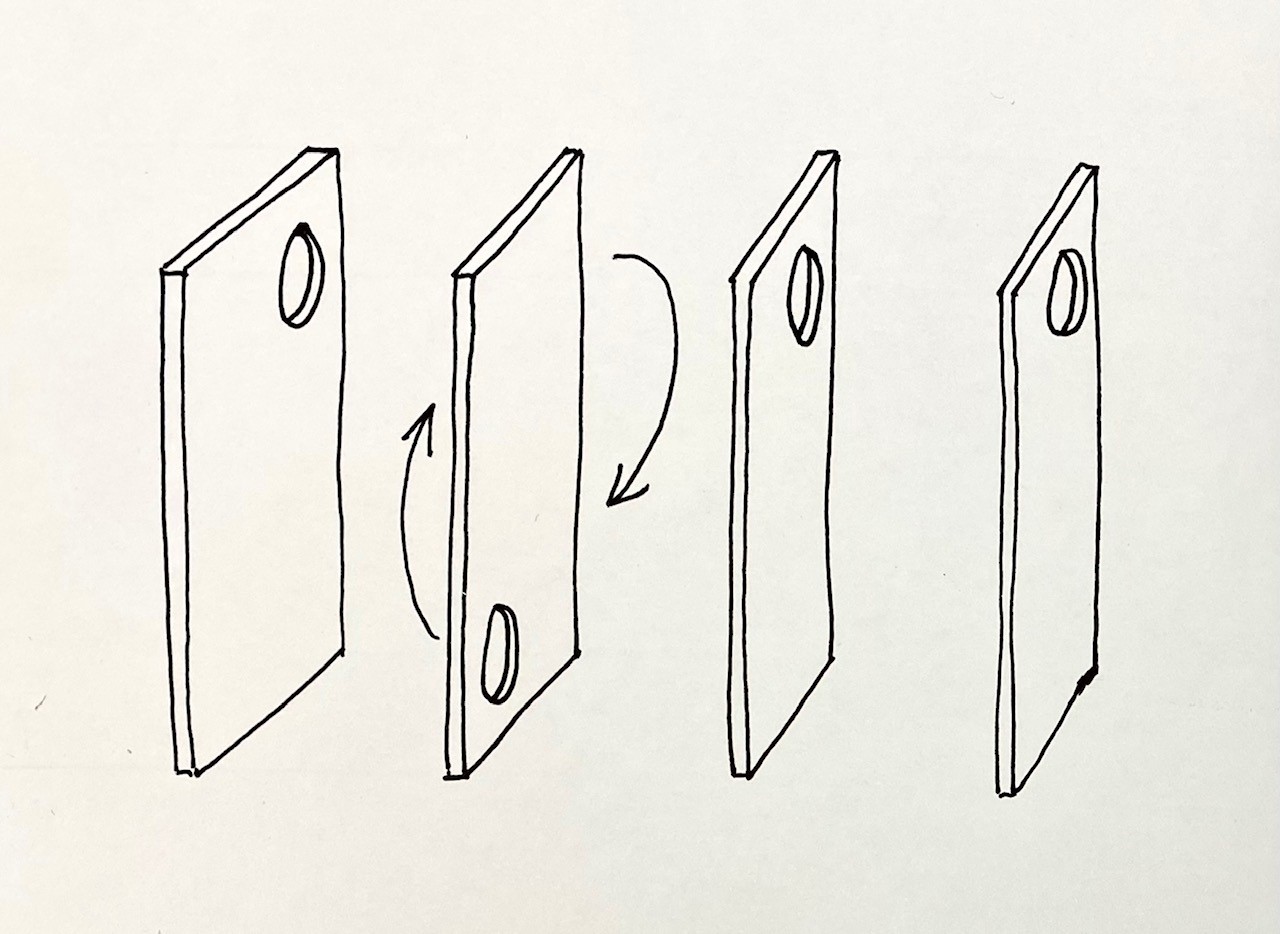
You may already know this but there is a connection between Swiss cheese and pandemic control! In the late 1980s (a decade of terrible industrial accidents (see footnote)) James Reason and John Wreathall (psychologist and nuclear engineer respectively) evolved a ‘Swiss cheese’ model of human errors.
Imagine a series of slices of Emmental – it needs to be the ‘classic’ Swiss cheese with the holes in it for the model to make any sense. If the slices are squashed together and enough holes happen to line up, a small object could pass through them all. If, on the other hand, the holes do not line up, the packed slices could not be penetrated this way.
Now, imagine a series of errors, one piled on top of the other. These are our holes in the cheese. If enough non-catastrophic errors occur in succession a really serious accident can occur – the object passing through the holes. Here’s an example:
Car driver notices that his vehicle’s handbrake needs to be pulled on harder and harder to stop movement on hills
Car driver forgets to mention this to mechanic when he drops vehicle off for a service.
Mechanic does not bother to test handbrake on a steep hill, only on a gentle slope.
Handbrake is not adjusted at the service.
Driver parks car on hill, pulls handbrake on almost, but not completely, fully.
Driver forgets to leave car in gear because, as he parks, he is distracted by a pedestrian – an old friend – waving at him.
Driver exits vehicle and slams door rather hard, producing just enough of a jolt to set vehicle in motion.
Ten metres down the road a pedestrian waiting to cross the road is struck by the vehicle…
None of the steps above was grossly negligent but, together, they created a situation where a serious accident occurred. All the holes in the cheese lined up. It’s not a far-fetched scenario; an acquaintance of mine damaged his car through a similar series of failings. Luckily it just rolled into a farm wall, slowly, smashing one headlight.
The eminent Australian virologist Ian M Mackay (Associate Professor at the University of Queensland) has adapted this model to illustrate the importance of steps in controlling a respiratory virus.
Consider the fact that no anti-virus measure is 100% effective – and that includes vaccines. So, each of the following is a cheese slice with a large or small hole, depending on how effective it is:
Masks
Hand washing
Social distancing
Vaccination
Good ventilation
Staying at home if you are symptomatic
Regular testing
If all of the above are implemented, there’s a good chance of getting a respiratory virus under control. If none of the above are implemented then all the holes in the cheese have metaphorically lined up and the small object – virus – passes through…
Note: Bhopal - Union Carbide plant; 1984, Chernobyl; 1986, Challenger space shuttle explosion; 1986, King's Cross fire and Herald of Free Enterprise disaster; 1987, Piper Alpha oil rig fire and Clapham Junction rail crash; 1988.