On metal hardness and medieval warfare
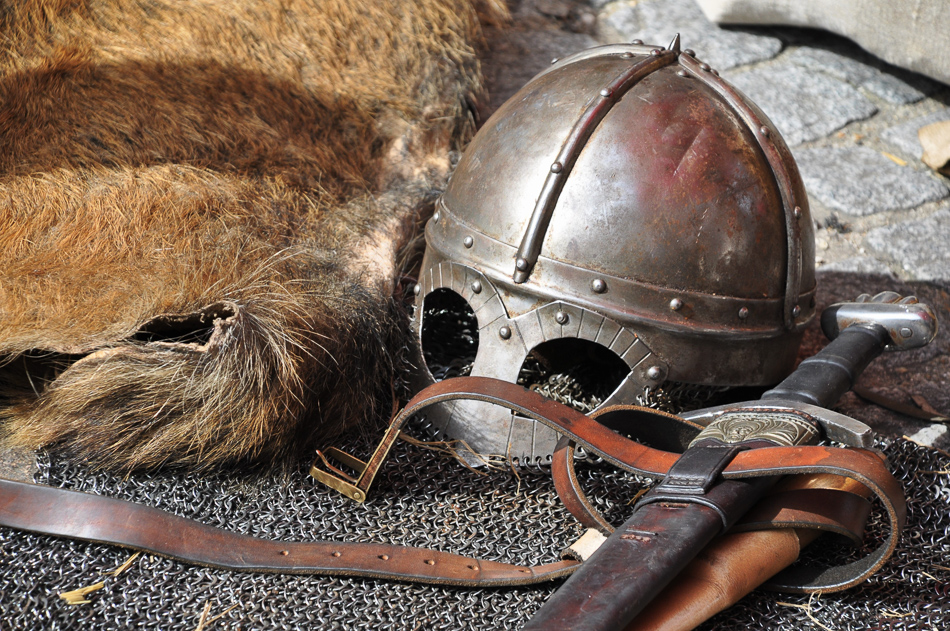
This is a slightly edited extract from a much longer piece I wrote for a trade magazine a few weeks ago. The background is also interesting as it touches on how ‘established’ historical knowledge can be overturned. For many years the view among historians was that the English archers’ arrows could not have penetrated the French soldiers’ armour at Agincourt. That view has been demolished because of fairly recent examinations of the skeletons of archers of the period, and experiments using medieval longbows:
In the absence of a knowledge of chemistry, the considerable expertise that was amassed by metalworkers over the centuries came about from empiricism and experiment; learning the hard, and occasionally dangerous, way. Of course, the demands of combat have driven technological change throughout history and some of you will be aware of the extraordinary process of making a samurai sword blade. At Agincourt (1415) the success of the English archers was undoubtedly partly attributable to the hardness of the metal ‘bodkin’ arrowhead. Animal hunters used ‘flat’ arrowheads to tear as much flesh as possible. The bodkin head, employed by military archers, was clearly developed for other purposes, having an essentially conical tip of hardened steel. As Peter N Jones stated in The metallography and relative effectiveness of arrowheads and armor during the middle ages “The progressive introduction of carburization heat treatment demonstrates a clear knowledge of the mechanics of hardening iron despite a lack of understanding of the underlying scientific principles.” For some time it was believed that the English longbow did not have armour-piercing capability but some of these weapons had a ‘draw weight’ of over 60kg and could launch a 42g arrow with an average flight velocity in excess of 100 metres per second! Such was the energy release on impact (see below) that the bodkin-tipped arrows would have comfortably penetrated the French armour at distances approaching 200m. Incidentally, the average height of medieval archers was 5’2” (1.575m) and the bows were between 6 and 7 feet long (6’6”=1.982m).
One estimate of the kinetic energy of a medieval English bowman’s arrow is approximately 200 Joules on impact. This would be something like having a sledgehammer swung into your chest. Consider that energy concentrated into the point of an arrow and the claim that the French soldiers’ armour could be penetrated no longer seems at all far-fetched.
Here is a worked example: If a 42g arrow arrives at its target doing 95 metres per second then, as energy is 0.5 x (mass x velocity squared) we have:
95 x 95 = 9025.
9025 x 0.042 kg = 379.05
379.05 x 0.5 = 189.525 joules